
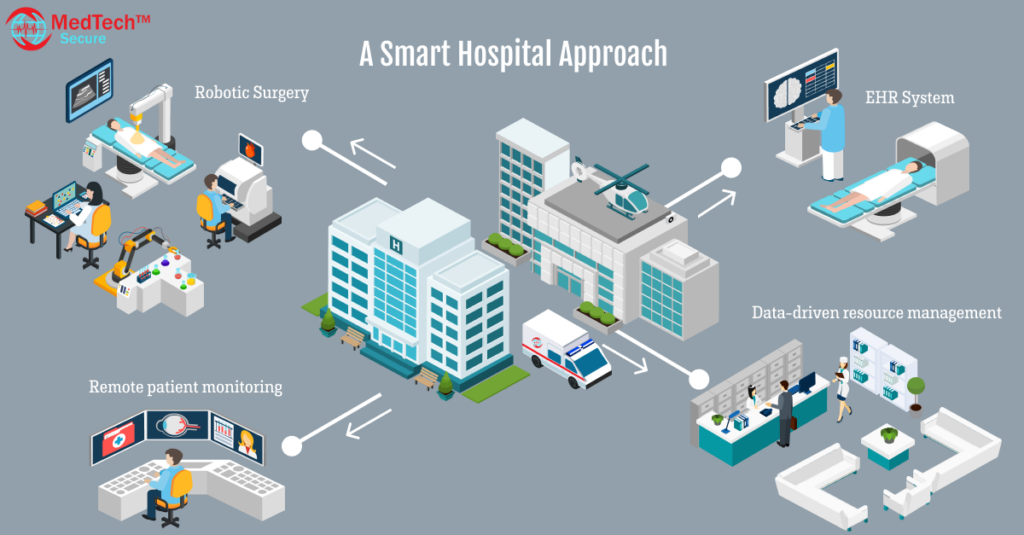
The concept of an AI Smart Hospital is transforming the healthcare landscape by integrating artificial intelligence (AI) into medical facilities. These advanced hospitals leverage AI to improve patient care, streamline operations, and enhance medical outcomes. Let’s explore how AI is revolutionizing hospitals and shaping the future of healthcare.
What is an AI Smart Hospital?
An AI Smart Hospital uses artificial intelligence technologies to automate processes, analyze vast amounts of medical data, and assist healthcare professionals in diagnosing and treating patients. From patient admission to post-treatment follow-ups, AI is embedded in various aspects of hospital management and clinical care.
Key Features of AI Smart Hospitals
- AI-Powered Diagnostics: AI algorithms can analyze medical images, lab results, and patient history to provide accurate and timely diagnoses.
- Robotic Surgery: Advanced robotic systems assist surgeons with precision, reducing the risk of complications and enhancing surgical outcomes.
- Predictive Analytics: AI can predict patient health trends, allowing for early intervention and personalized treatment plans.
- Automated Administrative Tasks: AI streamlines administrative duties such as patient scheduling, billing, and medical record management, freeing up staff for more critical tasks.
- Virtual Health Assistants: AI-powered chatbots and virtual assistants provide patients with immediate answers to their queries and reminders for medication and appointments.
- Remote Patient Monitoring: AI systems monitor patients in real-time, especially those with chronic conditions, and alert healthcare providers about any concerning changes.
Benefits of AI Smart Hospitals
- Enhanced Patient Care: AI enables faster and more accurate diagnostics, personalized treatments, and continuous monitoring, leading to improved patient outcomes.
- Operational Efficiency: By automating routine tasks, hospitals can reduce operational costs and improve workflow efficiency.
- Reduced Medical Errors: AI systems help minimize human errors in diagnostics, treatment, and medication management.
- Better Resource Management: AI predicts patient influx, optimizing staff allocation and resource usage, which is crucial during peak times or emergencies.
Challenges in Implementing AI in Hospitals
- Data Privacy: Ensuring the security of patient data is a significant concern as AI systems handle sensitive information.
- High Implementation Costs: Setting up AI infrastructure requires substantial investment in technology and training.
- Ethical Concerns: Decisions made by AI in patient care can raise ethical questions, especially regarding accountability in case of errors.
Future Trends in AI Smart Hospitals
- AI in Personalized Medicine: AI will play a pivotal role in developing personalized medicine by analyzing genetic information and tailoring treatments to individual patients.
- AI and Internet of Medical Things (IoMT): The integration of AI with IoMT devices will enhance remote monitoring and provide real-time health insights.
- Natural Language Processing (NLP): NLP technologies will improve patient-doctor interactions, enabling more efficient communication and documentation.
- AI in Drug Discovery: AI will accelerate the process of drug discovery and development, potentially leading to faster treatment options for various diseases.
Conclusion
The rise of the AI Smart Hospital marks a significant milestone in the evolution of healthcare. By harnessing the power of artificial intelligence, these hospitals are not only improving the quality of patient care but also making healthcare systems more efficient and resilient. As AI continues to advance, the future of smart hospitals looks promising, offering new possibilities for enhanced medical outcomes and operational excellence.
